Choosing furniture sounds simple – until you actually try to do it.
You find a sofa you love, order it, and suddenly the room feels cramped. Or you buy a dining table that technically fits, but now there’s no space to move around it comfortably.
This is one of the most common problems I see. People choose furniture based on how it looks, not how it fits or functions in the space.
The reality is, getting your furniture right isn’t about taste it’s about planning.
In this guide, I’ll walk you through how to choose the right furniture for your space so everything feels balanced, functional, and well thought through from the start.
Start With the Layout, Not the Furniture
Before choosing furniture, you need a layout. If you haven’t done that yet, read my guide on how to plan a room layout.
Your layout should come first, because it tells you:
- What furniture you actually need
- How much space you have
- The maximum sizes that will work
If you skip this step, you are guessing and that’s where costly mistakes happen.
Key point: Furniture should fit your layout, not the other way around.

Get the Scale Right
Scale is the biggest factor in whether a room feels comfortable or cramped.
- A large sofa in a small room will dominate the space
- Small furniture in a large room can feel lost and underwhelming
Measure your room carefully and map out furniture sizes before buying anything.
A simple approach is to:
- Mark out furniture footprints on the floor using masking tape
- Check you can still move around comfortably
- Adjust before committing
If you’re working with a larger open plan space you might like to read my post Furniture Layout Ideas for Open Plan Spaces
If you’re unsure what size furniture will actually work in your space, this is exactly the sort of thing I help with through my space planning services.
Prioritise Function Over Appearance
It is easy to fall in love with how something looks, but if it does not work for your lifestyle, it will quickly become frustrating.
Ask yourself:
- How will I use this piece every day?
- Does it solve a problem or create one?
- Is it the right size for the way I live?
For example, a beautiful coffee table that is too large will interrupt movement and become annoying very quickly.

Choose Key Pieces First
Start with the main items in the room, then build around them.
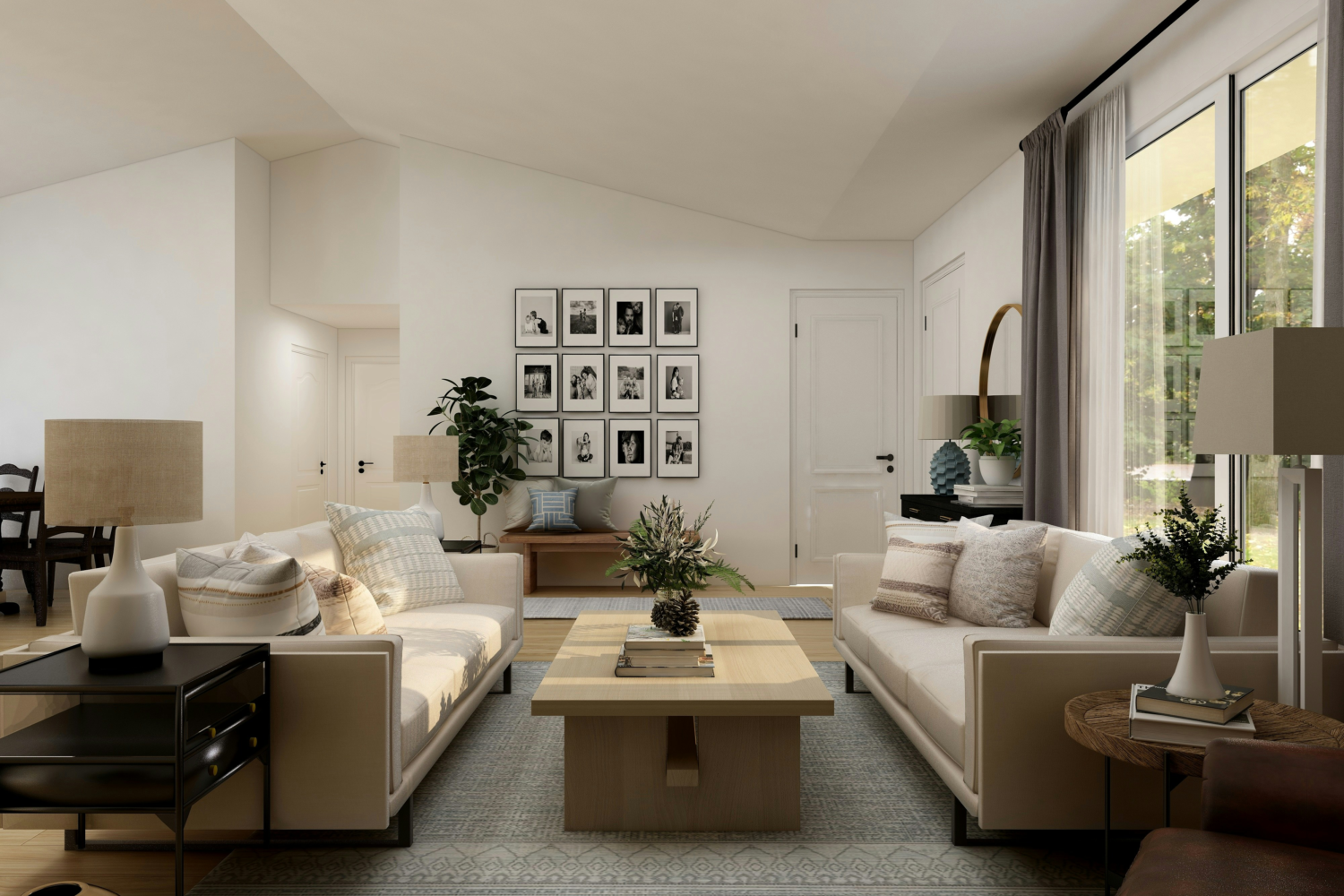
In a living room, this usually means:
- Sofa
- Coffee table
- Main storage piece or media unit
Once these are in place, you can layer in:
- Side tables
- Occasional chairs
- Lighting
- Accessories
This approach keeps the room balanced and prevents it from becoming cluttered.
Think About Movement and Flow
Furniture placement should allow you to move easily through the room.
- Leave around 75 – 90 cm for walkways
- Avoid blocking doorways or natural paths
- Make sure doors and drawers can open fully
Principle: If you have to squeeze past furniture, the layout is not working.
Mix Shapes and Materials
A room with only one type of furniture can feel flat.
- Combine soft shapes (sofas, upholstered chairs) with structured pieces (tables, cabinets)
- Mix materials such as wood, metal, and fabric
- Vary heights to create visual interest
This makes the room feel more considered and less like everything was bought in one go.

Avoid Buying Everything at Once
One of the biggest mistakes is trying to finish a room too quickly.
It is better to:
- Start with the essentials
- Live in the space
- Add pieces gradually
This gives you time to understand how the room works and what it actually needs.
Common Furniture Mistakes
- Buying furniture before planning the layout
- Choosing pieces that are too large for the room
- Not measuring properly
- Ignoring circulation space
- Trying to match everything perfectly instead of creating balance
Conclusion
Choosing the right furniture is not about finding the perfect pieces in isolation. It is about how everything works together in your space.
When you start with a layout, get the scale right, and prioritise function, your home will feel more comfortable, more practical, and far more considered.
If you are unsure what size or type of furniture will work in your home, getting it right at the planning stage can save you both time and money.
Book a free initial consultation to talk to me about creating a home that feels as beautiful as it looks.