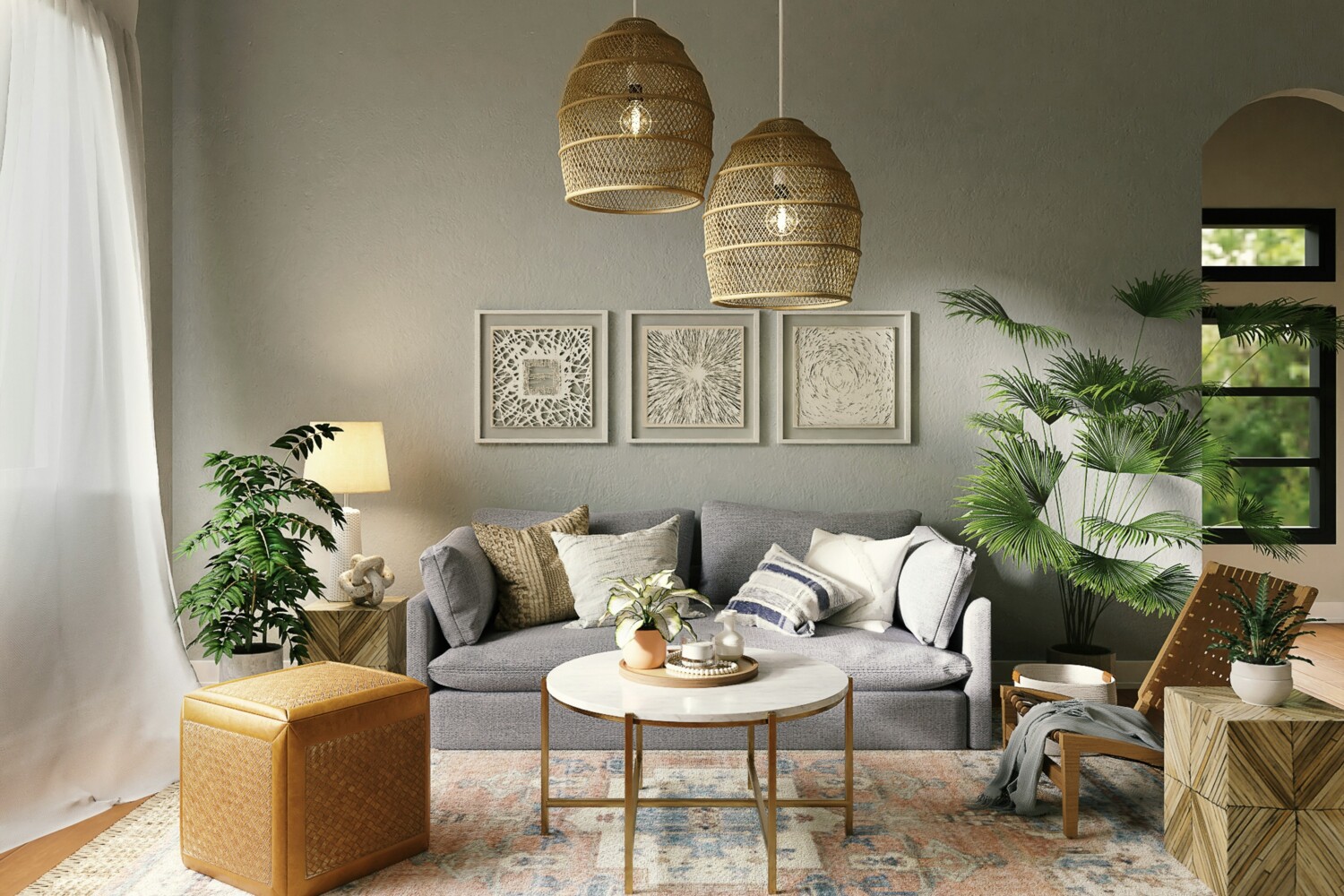
Choosing colours for your home should be exciting – but more often than not, it’s completely overwhelming. One minute you’re drawn to warm neutrals, the next you’re saving deep green kitchens and terracotta bedrooms.
If you’ve ever bought a tester pot, painted a patch, and instantly regretted it, you’re not alone.
The good news? There is a process to getting your home’s colour scheme right – and it doesn’t start with paint.
Here’s my step-by-step guide on how to choose a colour scheme for your home that feels balanced, timeless, and uniquely yours.
Start With How You Want the Room to Feel
Colour has a huge emotional impact, so always begin with the feeling you want to create, not a specific shade.
Ask yourself:
Do I want this space to feel calm and restful or energising and sociable?
Is this a room I spend time in during the day, the evening, or both?
Does it get natural light or need warming up with colour?
Tip: Cooler tones like blue, green and grey tend to feel calming, while warmer hues like rust, cream and soft pinks create a cosy atmosphere.

Work With What You Already Have
Before you buy a single paint sample, look around your space.
Your flooring, furniture, or large fixtures (like a kitchen or bathroom suite) will naturally influence your palette.
If your oak floor or grey sofa isn’t changing anytime soon, use it as your starting point – not the wall colour.
Your room’s fixed features are your foundation. Build your colour scheme around them, not against them.
Build a Balanced Palette
The easiest way to choose colours is to think in layers.
Base Colour – This is your main wall colour or backdrop – usually neutral or subtle. Think whites, soft greys, beiges, or pale greens.
Secondary Colour – Used for larger pieces: furniture, curtains, or feature walls. This is where you can be bolder.
Accent Colour – Accessories, cushions, artwork, or trim. This adds depth and personality without overwhelming the space.
Tip: A good rule is the 60-30-10 rule – 60% base, 30% secondary, 10% accent.

Consider Light It Changes Everything
Natural and artificial light can completely transform how colours appear.
-
North facing rooms often make colours look cooler.
-
South facing rooms bring out warmth and brightness.
Always test paint in different spots and check it at different times of day. Tip: Leave swatches up for at least 48 hours before deciding.


Create a Moodboard
Before committing to any paint, create a small physical or digital moodboard.
Combine samples of paint colours, fabrics or flooring, metal finishes (brass, chrome, black)
Seeing everything together helps you spot clashes early and ensures your palette feels intentional.
If you’re unsure, this is something I can create for you as part of my design consultation service – it takes the guesswork out of your colour scheme and helps you visualise your space before you buy a thing.
Keep It Consistent Across Your Home
You don’t have to paint every room the same colour, but your home will feel calmer and more cohesive if there’s a thread running through – whether it’s a repeating accent colour, material, or tone.
Example: Soft whites and neutrals throughout, with touches of sage or navy in each room.

Don’t Forget the Details
Woodwork, ceilings, and doors are part of your palette too.
-
White is a classic, alternatively try off-white woodwork for a softer, more layered look.
-
Or match your trim to your walls for a seamless, contemporary finish.
These small touches can make your colour scheme look designed, not accidental.
Common Mistakes to Avoid
-
Picking colours in isolation (they’ll always look different in context).
-
Using too many statement shades in one space.
-
Forgetting to test under your actual lighting.
-
Ignoring undertones – a cool grey and a warm beige rarely get along.
Conclusion
Choosing colours doesn’t have to be stressful.
By starting with mood, testing properly, and layering tones thoughtfully, you can create a home that feels cohesive, balanced, and unmistakably yours.
And if you’d like help pulling it all together, from moodboard to final palette, I can guide you through the process.
Book a free initial consultation to talk to me about creating a home that feels as beautiful as it looks.