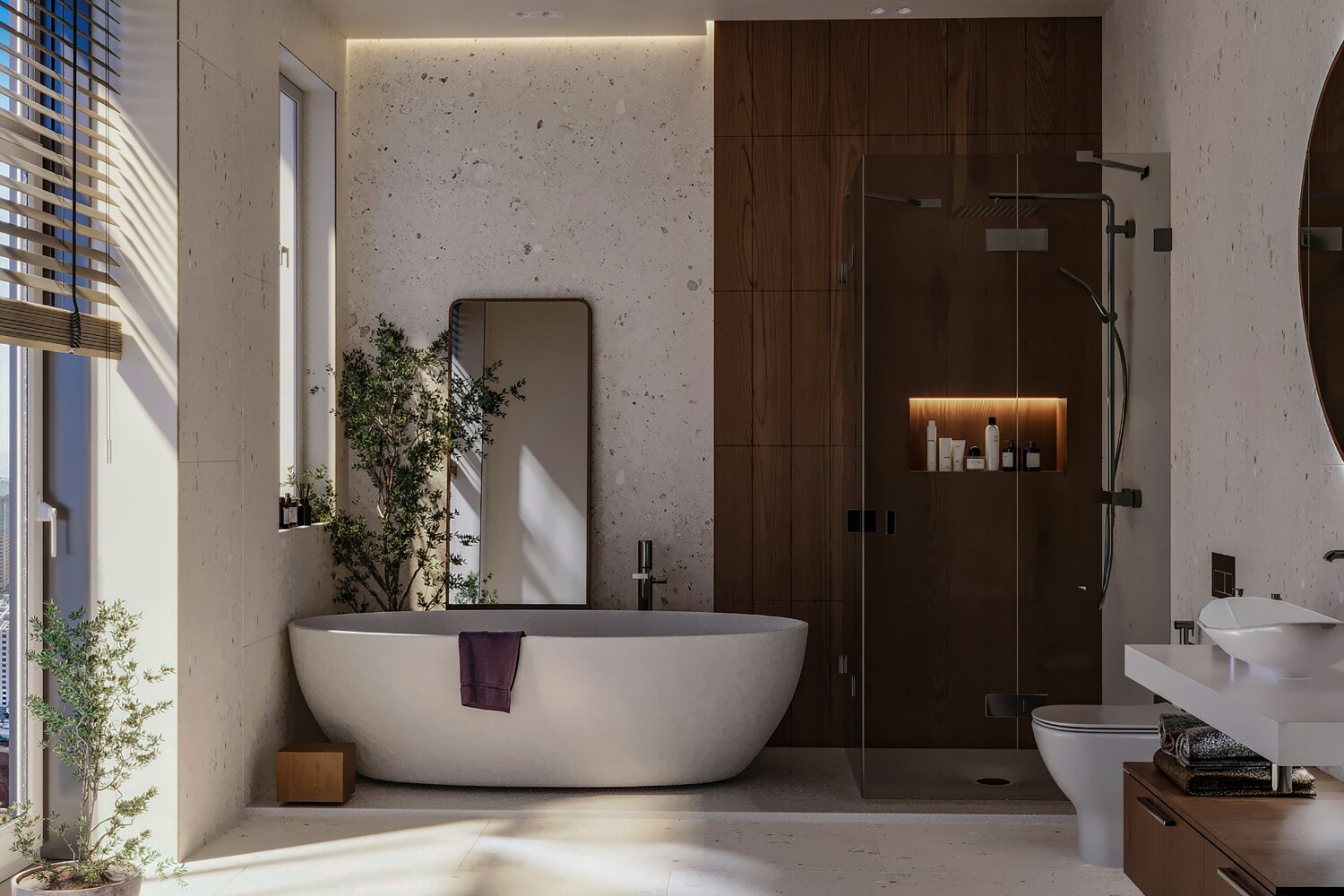
Bathrooms are often one of the smallest rooms in the home, but they are also one of the most complex to design. You are dealing with plumbing, drainage, door swings, and storage, all within a limited footprint.
It is very easy for a bathroom layout to feel cramped or awkward. The door might hit the toilet, the basin may feel squeezed in, or there is simply nowhere to store everyday essentials.
The difference between a frustrating bathroom and one that feels calm and functional almost always comes down to the layout.
In this guide, I will walk you through practical bathroom layout ideas to help you maximise space, improve flow, and create a bathroom that works properly day to day.
Start With the Fixed Elements
Before thinking about finishes or styling, you need to understand what cannot easily move.
-
Soil pipe location
-
Existing plumbing
-
Windows
-
Structural walls
These elements will often determine where your toilet, basin, and shower can realistically be positioned.
Moving plumbing is possible, but it increases cost and complexity, so it should only be done if it meaningfully improves the layout.

Choose the Right Layout for Your Space
There are a few common bathroom layouts that work well in most UK homes.
One-Wall Layout
Everything is positioned along a single wall.
This works well in very small bathrooms or cloakrooms and keeps plumbing simple.
Opposite Wall Layout
Fixtures are placed on two walls facing each other.
This suits narrow rooms but requires careful planning to maintain comfortable clearance.
L-Shaped Layout
Fixtures are arranged across two adjoining walls.
This is one of the most efficient layouts for balancing function and movement.
Zoned Layout
The room is divided into distinct areas for showering, washing, and toilet use.
This works best in larger bathrooms or family spaces.
Prioritise Circulation Space
A bathroom might technically fit everything in, but if you cannot move comfortably, it will not work in practice.
Aim for:
-
Around 60-70 cm clearance in front of key fixtures
-
Enough space to fully open doors, drawers, and shower screens
Principle to follow: A slightly smaller vanity in the right position is always better than a larger one that restricts movement.

Consider Replacing a Bath With a Shower
n many homes, particularly where space is limited, replacing a bath with a shower can significantly improve the layout.
-
Walk-in showers create a more open feel
-
Frameless glass helps maintain clear sightlines
-
You gain usable floor space
If it is your only bathroom, consider carefully before removing a bath, as it can affect practicality and resale.
Use Wall-Hung Fixtures to Create Space
Wall-hung toilets and vanities are an effective way to make a bathroom feel larger.
-
The visible floor underneath creates a sense of openness
-
Cleaning is easier
-
The overall look is more streamlined
Pairing these with concealed storage helps keep surfaces clear and uncluttered.
Maximise Storage Without Overloading the Room
Lack of storage is one of the main reasons bathrooms feel cluttered.
Practical solutions include:
-
Recessed niches within shower walls
-
Mirrored cabinets above the basin
-
Tall, narrow storage units
-
Built-in shelving
Rule: Prioritise vertical storage instead of adding bulky floor units.

Think Carefully About Door Position
Doors are often overlooked but can have a major impact on layout.
-
A standard door swing can block key fixtures
-
Sliding or pocket doors can save space
-
Re-hanging a door to open outward can improve usability
Small adjustments here can unlock better layout options.
Use Materials and Light to Support the Layout
Even with a good layout, poor material choices can make the space feel smaller.
-
Light, neutral colours help reflect light
-
Large format tiles reduce visual breaks
-
Consistent finishes create a more cohesive look
Running the same tile across both floor and walls can make the room feel larger and more unified.
Common Bathroom Layout Mistakes
-
Trying to include too many elements in a small space
-
Poor door positioning that blocks movement
-
Not allowing enough clearance around fixtures
-
Ignoring storage requirements
-
Choosing oversized or bulky fittings
Conclusion
A successful bathroom layout is not about fitting everything in. It is about making the space work properly.
By focusing on layout first, prioritising circulation, and making considered choices about fixtures and storage, even a small bathroom can feel calm, functional, and well designed.
Want to get the layout right before committing? Professional input at this stage can prevent costly mistakes later.
If you’re feeling stuck with your bathroom layout I can help you create a floor plan that works for your home.
Book a free initial consultation to talk to me about creating a home that feels as beautiful as it looks.